Have you ever stood in front of a closet full of clothes and felt like you had nothing to wear? Or stared at a packed calendar, a full fridge, or a long to-do list and felt overwhelmed by all the choices in front of you?
We often assume that having more options gives us more freedom, but in reality, too many choices can create decision fatigue, mental clutter, and unnecessary stress. What if the answer isn’t adding more systems, more routines, or more choices, but becoming more intentional about the ones you already have?
In this episode, Lisa explores how the concept of a capsule wardrobe can be applied far beyond fashion. By adopting a capsule mindset, you can create flexible, intentional systems for your schedule, meals, and routines that reduce overwhelm while giving you more freedom to adapt to real life.
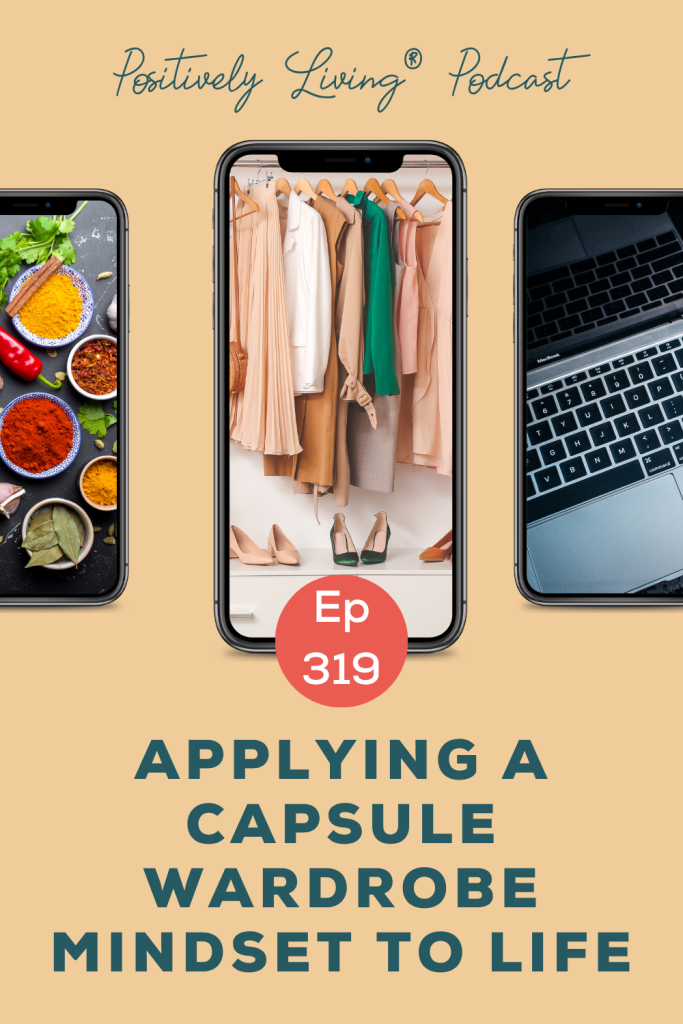
This week, episode 319 of the Positively Living® Podcast explores how to use capsule thinking as a practical productivity tool and shares simple ways to simplify decision-making, build sustainable systems, and create more ease in everyday life.
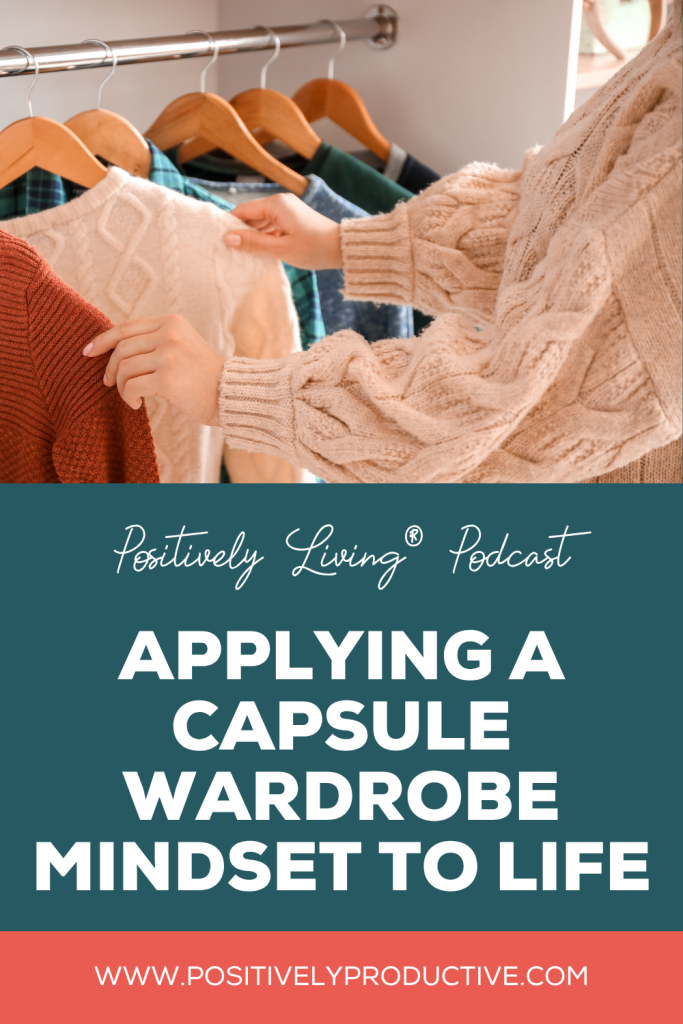
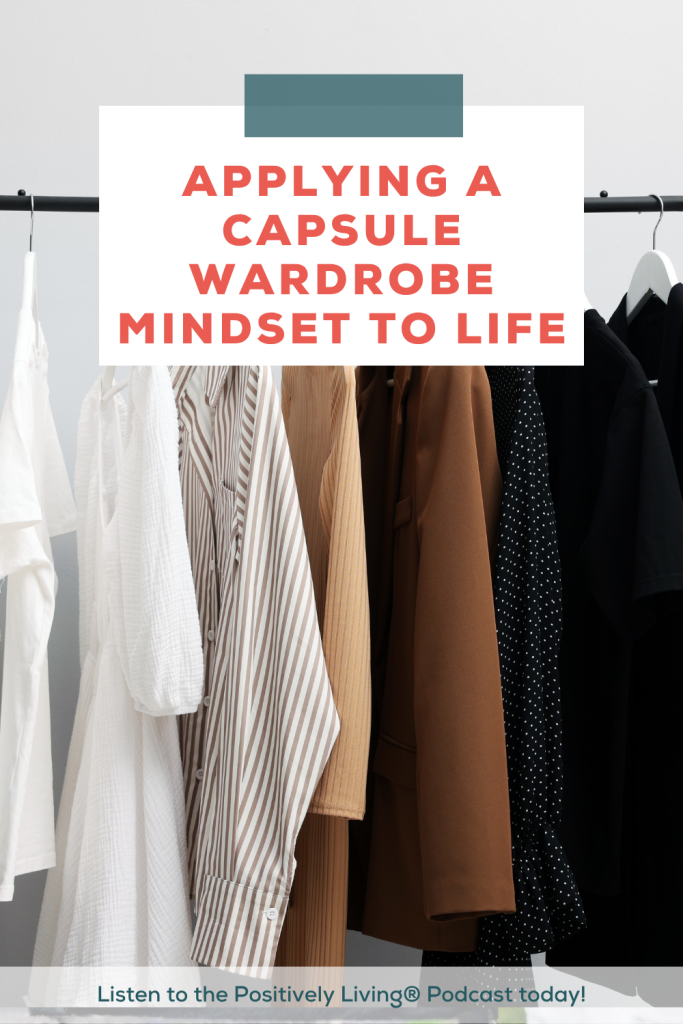
Applying a Capsule Wardrobe Mindset to Life
Have you ever stood in front of a closet full of clothes and felt like you had nothing to wear? Or looked at a packed calendar and felt like you had no time? Maybe you’ve opened a full refrigerator and somehow still felt like there was nothing to make for dinner.
It’s easy to assume that more options give us more freedom. More clothes, more choices, more opportunities, more flexibility. But often, the opposite is true. Too many options can create decision fatigue, mental clutter, and a constant sense of overwhelm.
What if the solution isn’t finding more options but becoming more intentional about the ones you already have?
This is where the concept of a capsule wardrobe offers a surprisingly powerful lesson. While most people associate capsule wardrobes with fashion, the principles behind them can help simplify nearly every area of life, from your schedule and routines to your meals and productivity systems.
What Is a Capsule Wardrobe?
A capsule wardrobe is a small, intentional collection of versatile clothing pieces that work well together. Rather than filling a closet with endless options, the goal is to curate a selection of items that can be mixed and matched in multiple ways.
The concept became popular because it solves a common problem: having plenty of clothes but feeling like nothing works together.
At its core, a capsule wardrobe is built on a few key principles:
- Curated over collected
- Versatility over volume
- Flexibility through intentional design
- Regular review and refinement
The goal isn’t simply to own less. It’s to get more value, more functionality, and more ease from what you already have.
And that same philosophy can be applied far beyond your closet.
Why Too Many Choices Create Overwhelm
One of the biggest contributors to overwhelm is decision fatigue.
Every decision requires mental energy. When we’re constantly choosing between dozens of options, even small decisions can become exhausting. By the end of the day, that mental load adds up.
Think about standing in the cereal aisle at the grocery store. An abundance of choices initially feels exciting, but after a while, it becomes overwhelming. The same thing happens with our schedules, habits, routines, and responsibilities.
The issue isn’t always that we have too much to do.
Sometimes we simply have too many options and not enough structure.
The capsule mindset helps solve this by creating intentional limits that reduce friction without eliminating flexibility.
Creating a Capsule Schedule
One of the most practical applications of capsule thinking is your schedule.
Traditional time blocking often asks you to assign specific tasks to specific hours. While that structure can be helpful, it can also become frustrating when real life inevitably interrupts your plans.
Meetings run long. Emergencies happen. Energy levels fluctuate. Motivation changes.
When schedules are too rigid, even small disruptions can make the entire day feel off track.
Instead, consider building a capsule schedule.
Rather than assigning every task to a specific hour, create flexible categories of time that can be rearranged as needed. These might include:
- Deep work
- Administrative tasks
- Creative projects
- Movement and wellness
- Rest and recovery
- Buffer time
The blocks remain consistent, but the way you combine them changes depending on the day.
Much like a capsule wardrobe allows you to create multiple outfits from a small collection of pieces, a capsule schedule allows you to build productive days from a small collection of flexible time blocks.
The result is structure without rigidity and flexibility without chaos.
Simplifying Meal Planning with Capsule Meals
Meal planning is another area where decision fatigue often shows up.
Many people spend significant mental energy trying to decide what to cook every day. The capsule mindset offers a simpler approach.
Instead of planning entirely different meals every night, focus on building a collection of versatile ingredients that can be used in multiple ways.
For example:
- Ground meat can become pasta sauce, tacos, chili, or soup.
- Extra pasta can become tomorrow’s pasta salad.
- Common spice combinations can support several different cuisines.
- Base ingredients can be adapted with just one or two changes.
Rather than creating more work, you’re intentionally creating overlap.
The goal isn’t rigid meal prep. It’s building a flexible system where fewer ingredients create more possibilities.
This approach reduces grocery costs, saves time, and dramatically lowers the daily mental load of meal decisions.
Building Capsule Routines
Many routine recommendations focus on creating the perfect sequence of habits and following it exactly every day.
The problem is that life rarely works that way.
Energy levels change. Schedules shift. Some mornings feel productive while others feel rushed or exhausting.
When routines are too rigid, it’s easy to feel like you’ve failed before the day has even begun.
A capsule routine takes a different approach.
Instead of following a fixed checklist, create a curated collection of habits that support your well-being. These habits can vary in length, effort, and complexity.
On days when you have plenty of energy and time, you may complete several of them.
On difficult days, you can focus on the smallest, most impactful practices.
The routine succeeds because it was designed to flex.
Ask yourself:
- What habits help me feel grounded?
- What activities make me feel most like myself?
- What practices create the greatest impact on my day?
Those become your capsule pieces.
Everything else becomes optional.
The Power of Seasonal Reviews
One of the most important aspects of a capsule wardrobe is that it isn’t static.
You review it regularly. You swap pieces in and out. You adjust for changing seasons and changing needs.
Life requires the same approach.
The systems that supported you during one season may not work in another.
A busy season may require different routines than a slower one. Summer schedules may look completely different from winter schedules. Family responsibilities, work demands, and personal priorities all evolve over time.
The capsule mindset embraces these changes.
Rather than rebuilding everything from scratch, you revisit your existing systems and ask:
- What’s still working?
- What no longer fits?
- What needs to be adjusted?
- What new support would serve me right now?
Small adjustments often create better results than complete overhauls.
Final Thoughts
The capsule mindset isn’t about minimalism for the sake of having less.
It’s about being intentional.
It’s about choosing quality over quantity, flexibility over rigidity, and systems that support your life instead of adding more complexity to it.
Whether you’re looking at your schedule, your meals, your routines, or your productivity habits, the question remains the same:
What is truly serving you right now, and what is simply taking up space?
Sometimes the greatest sense of freedom comes not from having more options, but from having the right ones.
If you’re looking for support in building productivity systems that fit your life, energy, and personality, explore coaching options at positivelyproductive.com/coaching. The most sustainable systems are the ones designed to work with you, not against you.
Thank you for listening! If you enjoyed this episode, take a screenshot of the episode to post in your stories and tag me! And don’t forget to follow, rate, and review the podcast and tell me your key takeaways!
Learn more about Positively LivingⓇ and Lisa at https://positivelyproductive.com/podcast/
Stop trying to fit into someone else’s productivity rules! Grab my free Productivity Toolkit, a collection of workbooks designed to help you explore how you work, uncover what truly matters to you, and create your very own energy-friendly systems. Get it here: www.positivelyproductive.com/plpkit
CONNECT WITH LISA ZAWROTNY:
LINKS MENTIONED IN THIS EPISODE:
Episode 21 with Hannah Donnelly
Episode 273: How to Make Time Blocking Fun
(Find links to books/gear on the Positively Productive Resources Page.)
Dance Song Playlist V1, V2, V3
Music by Ian and Jeff Zawrotny
Start your own podcast with Buzzsprout!