Have you ever caught yourself saying, “I’ll have fun once everything is done”—only to realize that everything is never actually done? Or felt guilty for taking time to do something you enjoy because there are still tasks waiting for you?
Many of us were taught that fun is something we have to earn after we’ve finished working. But when the to-do list never ends, joy keeps getting postponed. What if having fun wasn’t a reward for productivity—but one of the things that actually made you more productive?
In this episode, Lisa challenges the belief that productivity has to be serious. She explores the science behind play, explains how fun fuels creativity, motivation, and resilience, and shares practical ways to intentionally bring more joy into your daily life. You’ll learn why making space for play isn’t indulgent—it’s one of the smartest productivity strategies you can adopt.
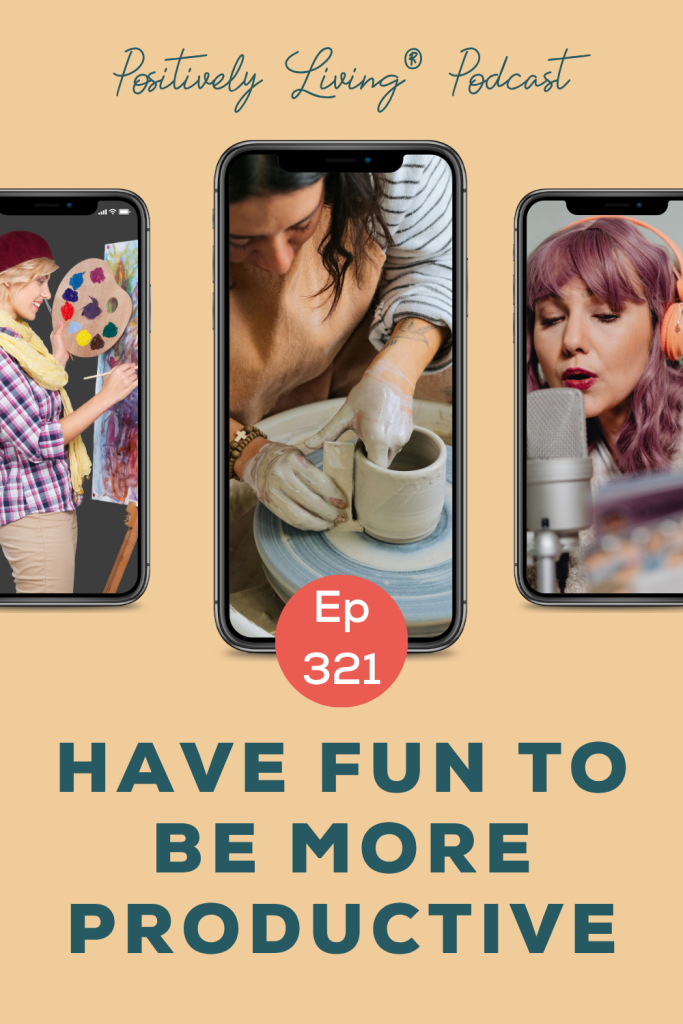
This week, episode 321 of the Positively Living® Podcast explores why having fun makes you more productive and shares simple ways to use play as a powerful tool for boosting your energy, creativity, and capacity.
Have Fun to Be More Productive
Have you ever caught yourself thinking, I’ll have fun once I finish everything on my to-do list?
The problem is, the to-do list is never really finished.
For many of us, fun has become something we believe we have to earn. We tell ourselves we’ll relax after the work is done, after the house is clean, after the inbox is empty, after the next deadline passes. But because there’s always another responsibility waiting, joy keeps getting pushed further and further into the future.
What if we’ve been looking at productivity all wrong?
What if having fun isn’t a distraction from getting things done—but one of the most effective ways to do them better?
Research shows that play isn’t just enjoyable. It’s essential. Making space for fun boosts creativity, motivation, resilience, and focus, giving your brain exactly what it needs to tackle meaningful work.
Why We Treat Fun Like a Reward
Somewhere along the way, many of us learned that productive people are serious people.
Work comes first.
Fun comes later.
If there’s still something left on your to-do list, you haven’t earned the right to enjoy yourself.
This belief often leads to an exhausting cycle:
You work until you’re depleted.
You finally allow yourself to have fun.
You feel guilty for enjoying it.
Then you jump right back into work.
Instead of feeling refreshed, you’re stuck in a pattern of burnout and self-judgment.
The truth is, there will always be more work to do.
Waiting until everything is finished before allowing yourself to experience joy often means you’ll never make room for it at all.
The Science Behind Play and Productivity
Play isn’t just for children.
Psychiatrist Stuart Brown, founder of the National Institute for Play, has spent decades studying how play affects the human brain. His research shows that playful activities support neurological growth throughout our lives, helping us become more creative, adaptable, socially connected, and resilient.
One of the biggest reasons is dopamine.
When you engage in activities you genuinely enjoy, your brain releases dopamine—the neurotransmitter associated with motivation, learning, reward, and creative thinking.
That dopamine doesn’t just make you feel good.
It helps you:
- Stay motivated.
- Solve problems more creatively.
- Learn more effectively.
- Focus more easily.
- Approach challenges with greater energy.
In other words, fun isn’t the opposite of productivity.
It’s one of its greatest drivers.
Play and Fun Aren’t the Same Thing
Although we often use the words interchangeably, they’re slightly different.
Play is the activity.
It’s voluntary, engaging, and something you do simply because you enjoy it. It might be painting, playing music, gardening, building something, hiking, dancing, or playing a game.
Fun is the experience.
It’s the joy, laughter, curiosity, and lightness that comes from those activities—or sometimes from the smallest moments, like sharing jokes over dinner or taking an unexpected detour that becomes an adventure.
The important part isn’t what you choose.
It’s that you’re doing something because you genuinely enjoy it, not because it helps you achieve another goal.
Ironically, that’s exactly why it ends up making you more productive.
Why Adults Stop Playing
If play is so beneficial, why don’t we do more of it?
Because many of us have internalized the belief that productivity has to be difficult.
We celebrate hard work.
We wear busyness like a badge of honor.
We often associate struggle with success.
As a result, activities that exist purely for enjoyment can feel selfish or irresponsible.
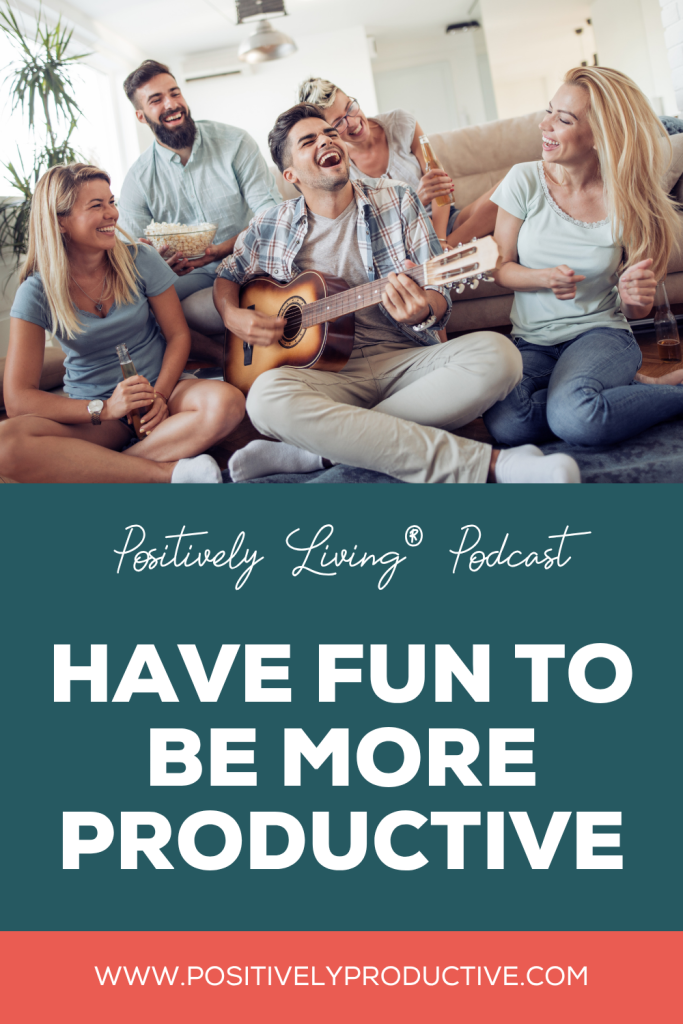
Many people even feel guilty reading a novel, playing guitar, sketching, or watching something funny when there are chores waiting.
But fun isn’t something you have to earn.
It’s something your brain needs.
Step 1: Rediscover What You Used to Love
A great place to begin is by thinking back to activities you’ve quietly abandoned.
Ask yourself:
- What did I love doing simply because it was enjoyable?
- What hobbies have disappeared from my life?
- What always made me lose track of time?
Maybe you used to paint.
Maybe you played an instrument.
Maybe you loved baking, photography, puzzles, hiking, or reading novels.
Often, the activities we’ve stopped doing are exactly the ones our minds are craving most.
Step 2: Stop Treating Fun Like Dessert
Many of us think of fun as something that comes after productivity.
Instead, try flipping that idea.
Think of play as fuel.
Just as sleep, rest, and nourishing food increase your capacity, joyful activities prepare your brain to do its best work.
Rather than rewarding yourself with fun after finishing your tasks, experiment with doing something enjoyable first.
Ten minutes of reading a favorite novel.
Five minutes doodling.
Playing guitar before opening your laptop.
A quick walk while listening to music you love.
These small moments often become the energy boost that makes difficult work feel far more manageable.
Step 3: Start Small—and Protect It
Adding more fun to your life doesn’t require a vacation.
You don’t need an entire free weekend.
Even five to twenty minutes can create a meaningful shift.
The key is protecting that time.
Because when life gets busy, fun is usually the first thing to disappear.
Instead, schedule it intentionally.
Think about activities that fit different amounts of available time.
Maybe you have:
- Five-minute joy activities
- Fifteen-minute creative breaks
- One-hour hobbies for quieter weekends
The easier they are to access, the more likely you’ll actually use them.
A Simple Shift That Changed Everything
Lisa shares the story of a coaching client who was balancing a demanding full-time job while caring for aging parents and managing a household alone.
He constantly felt behind.
Because he wasn’t finishing everything he needed to do, he also wouldn’t allow himself to enjoy the things he loved—playing guitar and drawing.
He believed he needed to earn them.
Instead of telling him to work harder, Lisa encouraged him to do the opposite.
Before tackling difficult tasks, she asked him to spend a few minutes doing something creative simply because he enjoyed it.
Not to improve his skills.
Not to accomplish anything.
Just to play.
The results were remarkable.
His creative sessions helped calm his nervous system, improved his focus, increased his motivation, and made it easier to tackle responsibilities afterward.
Rather than distracting him from productivity, fun became the catalyst for it.
Creating a Positive Productivity Loop
When you prioritize play, you create a powerful cycle.
You experience more joy.
Your brain releases dopamine.
You become more creative and motivated.
You approach difficult tasks with greater focus.
You accomplish more with less resistance.
You feel better about your work.
And because you feel better, you’re more likely to make time for fun again.
Instead of burnout feeding burnout, joy begins fueling productivity.
Final Thoughts
Having fun isn’t frivolous.
It isn’t something reserved for vacations, weekends, or after every task has been completed.
It’s one of the healthiest investments you can make in your productivity, your creativity, and your overall well-being.
The world will always ask more of you.
There will always be another responsibility waiting.
But you don’t have to postpone joy until life finally slows down.
Because sustainable productivity isn’t built on constant seriousness.
It’s built on creating a life where you have the energy, resilience, and joy to keep showing up.
If you’d like help creating routines that support both your productivity and your well-being, explore coaching opportunities at positivelyproductive.com/coaching.
Thank you for listening! If you enjoyed this episode, take a screenshot of the episode to post in your stories and tag me! And don’t forget to follow, rate, and review the podcast and tell me your key takeaways!
Learn more about Positively LivingⓇ and Lisa at https://positivelyproductive.com/podcast/
Stop trying to fit into someone else’s productivity rules! Grab my free Productivity Toolkit, a collection of workbooks designed to help you explore how you work, uncover what truly matters to you, and create your very own energy-friendly systems. Get it here: www.positivelyproductive.com/plpkit
CONNECT WITH LISA ZAWROTNY:
LINKS MENTIONED IN THIS EPISODE:
Episode 56: How Play Helps Quiet Your Inner Critic with Jeff Harry
Episode 197: Why Prioritizing Happiness Makes You More Productive
Episode 312: Energy Management: Build Capacity Instead of Just Managing Time
(Find links to books/gear on the Positively Productive Resources Page.)
Dance Song Playlist V1, V2, V3
Music by Ian and Jeff Zawrotny
Start your own podcast with Buzzsprout!