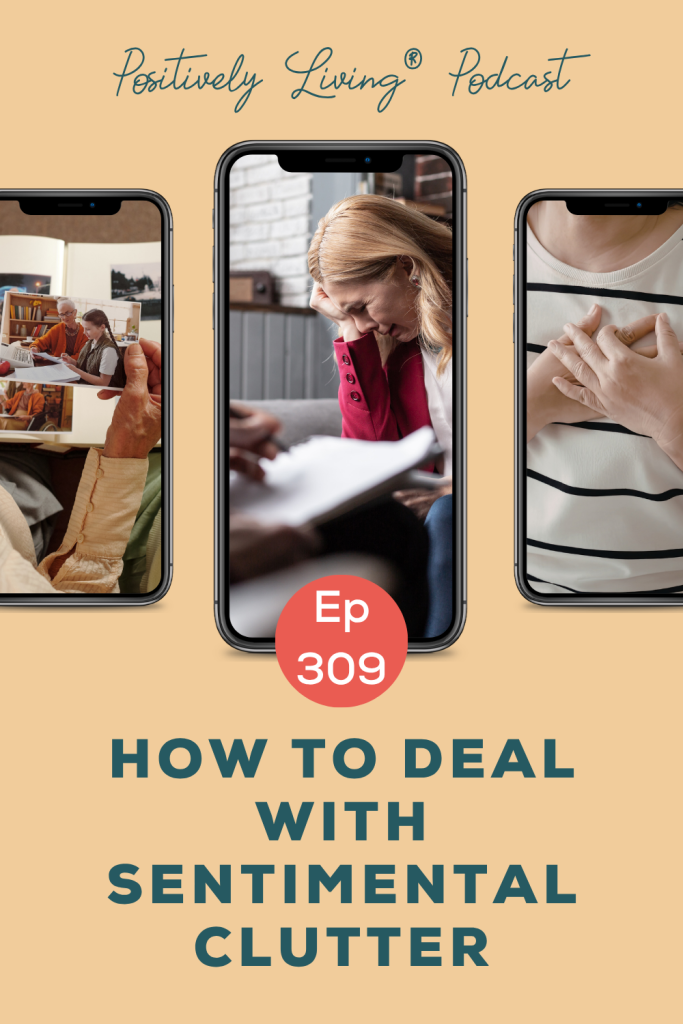
Physical clutter is one thing, but sentimental items are in a category of their own. Whether it is a gift from a loved one, a childhood keepsake, or something belonging to someone you have lost, these objects often feel like stand-ins for the people and experiences we cherish. If you have ever felt frozen in front of a box of old cards, you know that this is not just about cleaning—it is about emotional attachment, grief, and identity.
This week, episode 309 of the Positively LivingⓇ Podcast explores why sentimental clutter hits differently and how to navigate the process of letting go without rushing your heart.
In this episode of the Positively LivingⓇ Podcast, I share why you do not have to get rid of anything to be successful and how to use decluttering as a tool for healing rather than a source of guilt.
Sentimental Clutter: Why It Stays and How to Heal
You stand in front of a box of old cards or keepsakes. You feel completely frozen. This is not like a pile of old mail or t-shirts you never wear. These items represent your childhood, someone you lost, or a meaningful time in your life.
When you fear you might lose an item, you really fear you will lose the memory or the connection that goes with it. This struggle is the one clients face most often. It is time to have a different conversation about these objects. You can move forward without rush or guilt.
The Emotional Weight of Objects
Sentimental items hit different because objects become stand-ins for people and experiences. Psychologists describe this bond as a form of emotional attachment. These items trigger memories. If you lost someone, their belongings can feel like a piece of that person is still in your home.
Clutter can also act as a buffer from the world. When you feel grief or overwhelm, you may not have the energy to make dozens of small choices. Guilt often makes you hold on even tighter. You might worry that let go of an object means you disrespect the person who gave it to you. This is a very common and human response to pain.
The Power of the Maybe Rule
The most important thing to know is that you do not have to get rid of anything. Decluttering is a tool. You only use it when it serves you. If an item brings comfort or connects you to someone meaningful, that is a valid reason to keep it.
If you feel unsure, wait. I use a specific rule with my clients: if it is a maybe, it is a keep. The pain of discard something you can never get back is not worth the floor space you gain. Grief has no timeline. You are ready when your gut tells you so, not when someone else thinks you should be.
Questions to Ask When You Are Stuck
When you reach a place where you want to decide, the right questions can help you find clarity. These are not meant to pressure you. They help you understand what you actually want.
Try to ask yourself:
- What does this item represent to me? Is it the person, a memory, or a version of yourself?
- Is keep this item serve me, or hold me back? Sometimes an item helps you heal; other times it keeps you stuck.
- Do I keep this for me or out of obligation? The person who gave you the gift wanted you to feel good, not burdened.
- If I imagine let this go, how do I feel? Relief is a valid answer. So is dread.
Practical Ways to Move Forward
If you are ready to make a change, start with the easiest items first. This helps you build your decluttering muscle. You do not have to begin with the hardest objects. Focus on duplicates or things from a life phase that feels complete.
You can also use a maybe box. Box up the items you feel unsure about and set a reminder to check it in six months or a year. This is a purposeful delay that lets you take a partial step. You can also choose to reduce a collection rather than remove it. Keep ten favorite pieces instead of fifty to honor the memory with less bulk.
Final Thoughts
Sentimental clutter is about identity, love, and loss. To handle it well, you must honor your heart. You get to decide what to keep and when you are ready to release it. Clutter is only clutter if it stands between you and the life you want to live.
Ready to start? Follow these steps:
- Pick one box of keepsakes that feels easy to review.
- Identify one item you keep only out of guilt and give yourself permission to release it.
- Create a Maybe Box for items that feel like a maybe today.
- Set a calendar reminder to review your choices in three to six months.