We often think rest is something we earn after we’ve worked hard enough. We push through exhaustion, tell ourselves we’ll slow down later, and believe that getting more done is the key to feeling better. But what if we’ve been thinking about rest all wrong?
This week, in episode 323 of the Positively LivingⓇ Podcast, we’re revisiting one of our most impactful conversations with Gary Ware, founder of Breakthrough Play, keynote speaker, certified coach, and bestselling author of Playful Rebellion. As part of our summer series on energy, stress, and nervous system regulation, this timely re-release explores why rest is essential—not as a reward for productivity, but as the foundation that makes sustainable productivity possible.
Gary Ware is the founder of Breakthrough Play, a keynote speaker, certified coach, and the bestselling author of Playful Rebellion. Through applied improvisation, positive psychology, and the science of play, Gary helps individuals and organizations reduce stress, strengthen communication, spark creativity, and build more sustainable ways of working. His mission is to help people challenge the belief that productivity requires constant hustle and instead embrace play and rest as powerful tools for greater impact, innovation, and well-being.
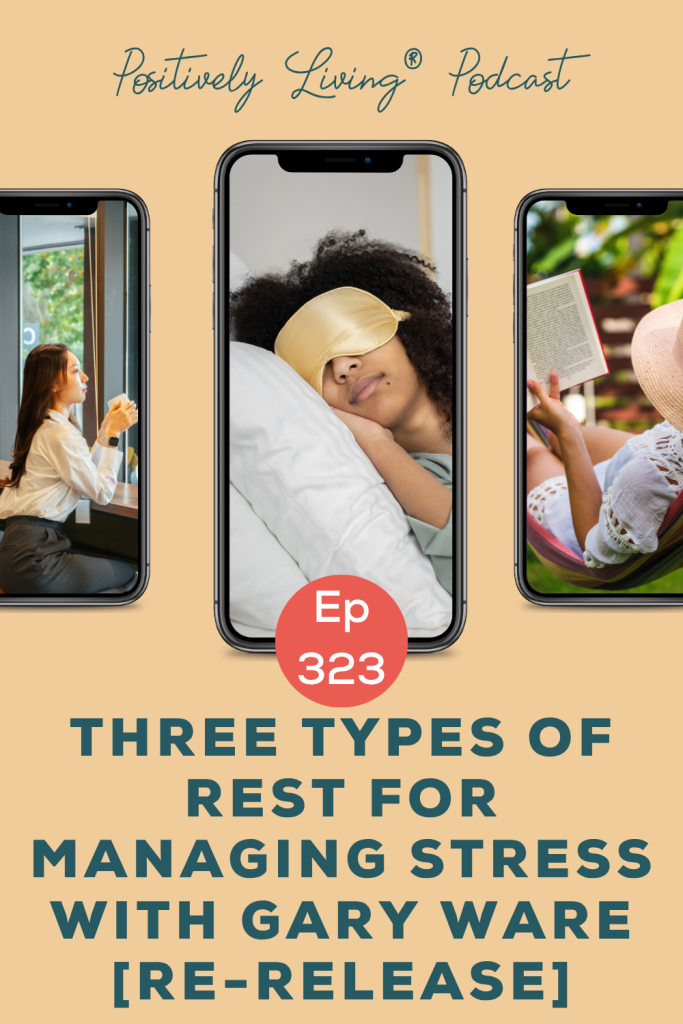
In this conversation, Gary introduces three distinct types of rest—macro, micro, and meso—and explains how each one helps reduce stress, restore creativity, and support your energy in different ways. He also shares why play isn’t childish, why entrepreneurs often resist rest the most, and how small shifts can dramatically improve your focus, well-being, and impact.
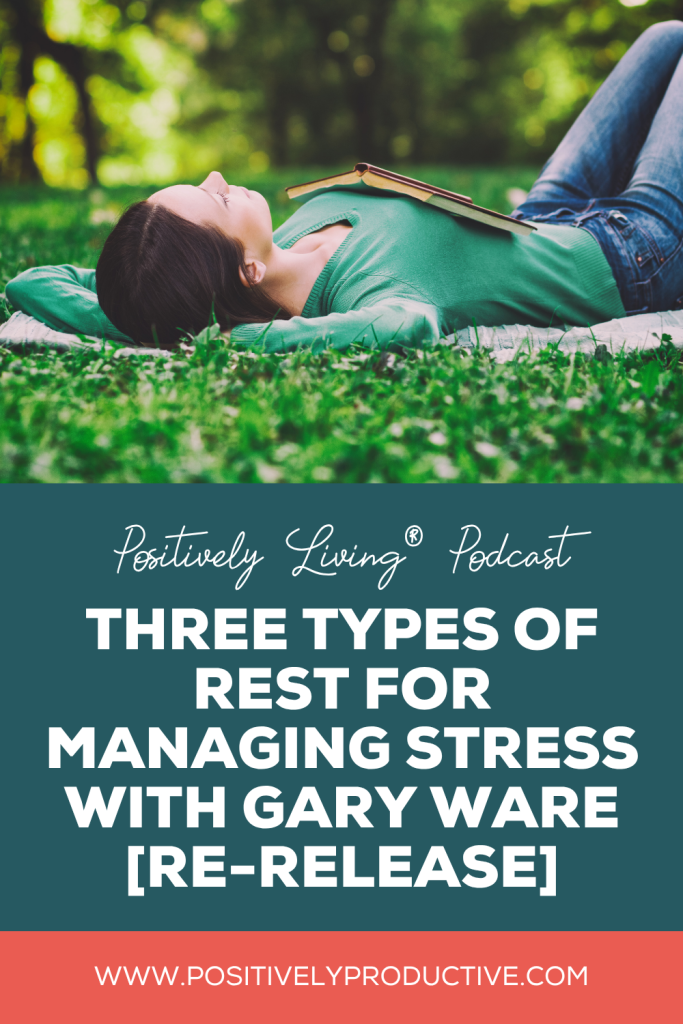
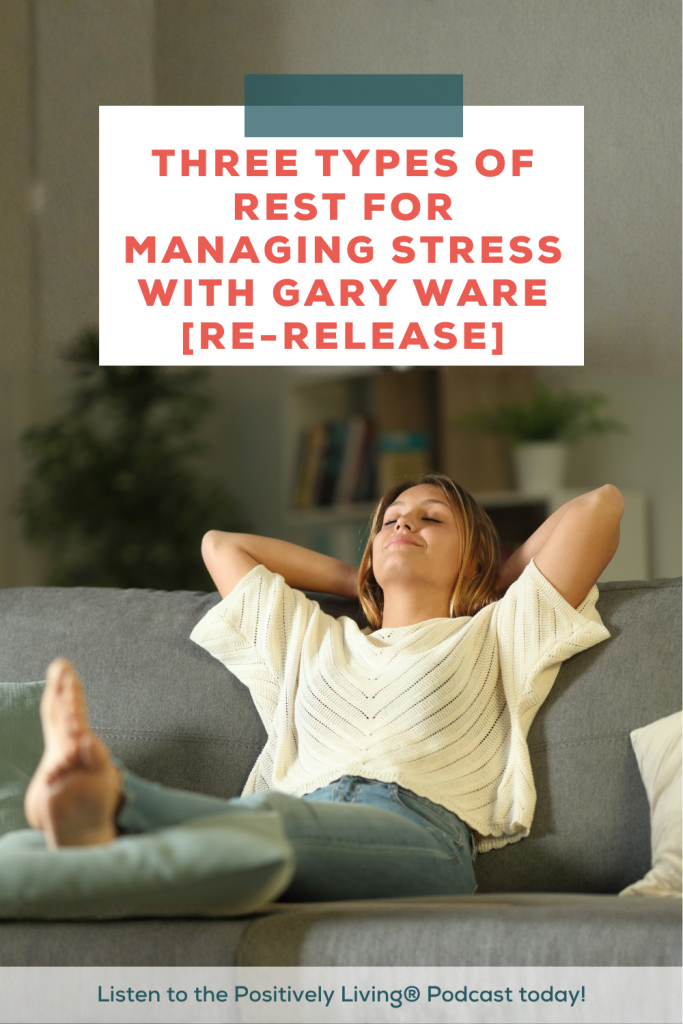
Three Types of Rest for Managing Stress with Gary Ware [Re-release]
Have you ever told yourself, “I’ll rest after I finish this one last thing”?
Only to discover that “one last thing” somehow became ten more tasks?
Maybe you’ve powered through your workday fueled by caffeine and determination, answered emails during lunch, skipped breaks because you were “on a roll,” and finally collapsed into bed feeling completely drained. Then you wake up the next morning… still exhausted.
For many of us, this cycle feels normal.
We’ve been taught that productivity comes first and rest comes later—as a reward for working hard enough.
But what if we’ve been thinking about rest backwards all along?
In this re-released episode of the Positively Living® Podcast, I sit down with Gary Ware, founder of Breakthrough Play and author of Playful Rebellion, to challenge one of the biggest myths surrounding productivity.
His message is surprisingly simple:
We don’t work to earn rest. We rest so we can do our best work.
It’s a mindset shift that can completely transform how we approach stress, creativity, and sustainable productivity.
The Productivity Trap So Many of Us Fall Into
Hustle culture has convinced us that pushing harder is always the answer.
Need to finish a project? Work longer.
Feeling overwhelmed? Keep going.
Completely exhausted? Just make it through this week.
The problem is that our brains simply aren’t designed to operate under constant stress.
Gary explains that when we’re overwhelmed, our nervous system shifts into fight, flight, or freeze mode. While this response is incredibly helpful during actual emergencies, it’s far less useful when we’re simply trying to answer emails, make decisions, or solve creative problems.
Instead of helping us perform better, chronic stress actually reduces our access to the parts of the brain responsible for creativity, empathy, flexibility, and problem-solving.
Ironically, the harder we push ourselves, the harder it becomes to do the work we’re trying to accomplish.
Rest Is More Than Just Sleep
When people hear the word “rest,” they almost always think about sleep.
Sleep absolutely matters—but it’s only one piece of the equation.
One of my favorite parts of this conversation is Gary’s explanation of the three different types of rest we all need.
Once you understand them, it becomes much easier to recognize why eight hours of sleep sometimes still leaves you feeling depleted.
Macro Rest: The Foundation
Macro rest is what most of us already recognize.
It’s your nightly sleep and the deeper recovery your body needs.
But Gary offers an important perspective that I absolutely love.
Instead of obsessing over getting the “perfect” eight hours, start by improving the quality of the sleep you’re already getting.
What helps your body actually transition into rest?
Maybe it’s putting your phone away an hour before bed.
Reading instead of scrolling.
Creating a calming bedtime routine.
Or simply allowing yourself to slow down before expecting your brain to instantly fall asleep.
Just like children need bedtime routines, adults need transition rituals too.
Micro Rest: Five Minutes Can Change Everything
This was probably the biggest eye-opener for me.
Most of us move from one meeting, task, or responsibility directly into the next without ever giving our brains time to recover.
Gary shares research showing that employees who went from meeting to meeting experienced steadily increasing stress throughout the day.
But those who paused—even briefly—between meetings maintained fresher, calmer brains and often performed even better than they had at the beginning of the day.
The good news?
These breaks don’t need to be long.
Just five intentional minutes can make a tremendous difference.
The key is choosing something that actually restores you.
Not checking email.
Not scrolling social media.
Not squeezing in one more task.
Instead, maybe you:
- Take a short walk.
- Read a few pages of a book.
- Stretch.
- Play with Legos (yes, really!).
- Step outside.
- Dance to your favorite song.
- Call a friend.
- Simply breathe.
Five minutes may not sound like much.
But your brain notices.
Meso Rest: The Missing Piece Most High Achievers Skip
This type of rest is where many ambitious people struggle the most.
Meso rest means intentionally stepping away from work for a longer period of time.
Maybe that’s:
- A half-day on Friday.
- An afternoon devoted to a hobby.
- A weekend away.
- A vacation.
- A regular self-care day.
The important part isn’t what you do.
It’s that you stop working.
Gary shares fascinating research showing that inventors with hobbies produced three times more patents than inventors without hobbies.
Why?
Because our brains continue solving problems even when we’re focused on something completely different.
Sometimes the breakthrough arrives precisely because we’ve stopped trying so hard to force it.
How many times have your best ideas shown up in the shower, while driving, or during a walk?
Exactly.
Play Isn’t Childish—It’s Essential
Gary has spent years helping people rediscover play, and one of the biggest misconceptions he encounters is that play has to look a certain way.
It doesn’t.
For some people, play is gardening.
For others, it’s reading novels.
Painting.
Cooking.
Building Legos.
Playing guitar.
Exploring nature.
Laughing with friends.
Learning something new.
Play isn’t about acting like a child.
It’s about engaging in activities that naturally bring you joy, curiosity, creativity, and presence.
Those moments don’t distract you from productivity.
They fuel it.
Stop Trying to Earn Your Rest
Perhaps the most powerful moment in our conversation comes when Gary says:
“We don’t work to rest. We rest so that we can do the best possible work.”
Read that again.
How many of us have spent years believing the exact opposite?
What if rest wasn’t a reward?
What if it was part of the work itself?
What if taking care of yourself wasn’t selfish—but strategic?
Because sustainable productivity isn’t about squeezing every ounce of energy from yourself.
It’s about protecting your energy so you can continue showing up for the people, projects, and purpose that matter most.
Final Thoughts
If you’ve been feeling overwhelmed lately, maybe the answer isn’t finding a better planner or a more efficient workflow.
Maybe the answer is much simpler.
Maybe you need permission to pause.
To take the five-minute break.
To close the laptop.
To protect your sleep.
To pick up the hobby you’ve been putting off.
To laugh.
To play.
To rest before you’re completely depleted.
Because rest isn’t the opposite of productivity.
It’s what makes productivity sustainable.
And perhaps the most productive thing you can do today is give yourself permission to stop trying to earn something you’ve needed all along.
Thank you for listening! If you enjoyed this episode, take a screenshot of the episode to post in your stories and tag me! And don’t forget to follow, rate, and review the podcast and tell me your key takeaways!
Learn more about Positively LivingⓇ and Lisa at https://positivelyproductive.com/podcast/
Stop trying to fit into someone else’s productivity rules! Grab my free Productivity Toolkit, a collection of workbooks designed to help you explore how you work, uncover what truly matters to you, and create your very own energy-friendly systems. Get it here: www.positivelyproductive.com/plpkit
CONNECT WITH GARY WARE:
CONNECT WITH LISA ZAWROTNY:
LINKS MENTIONED IN THIS EPISODE:
Playful Rebellion: Maximize Workplace Success Through the Power of Play
Episode 321: Why Fun and Play Belong in a Productive Life
Episode 249: Five Energizing Habits to Make You More Productive
Episode 172: Why the Simple Act of Pausing Will Make You More Productive
Play: How It Shapes the Brain, Opens the Imagination, and Invigorates the Soul by Dr. Stuart Brown
Primed to Perform by Neel Doshi & Lindsay McGregor
(Find links to books/gear on the Positively Productive Resources Page.)
Dance Song Playlist V1, V2, V3
Music by Ian and Jeff Zawrotny
Start your own podcast with Buzzsprout!