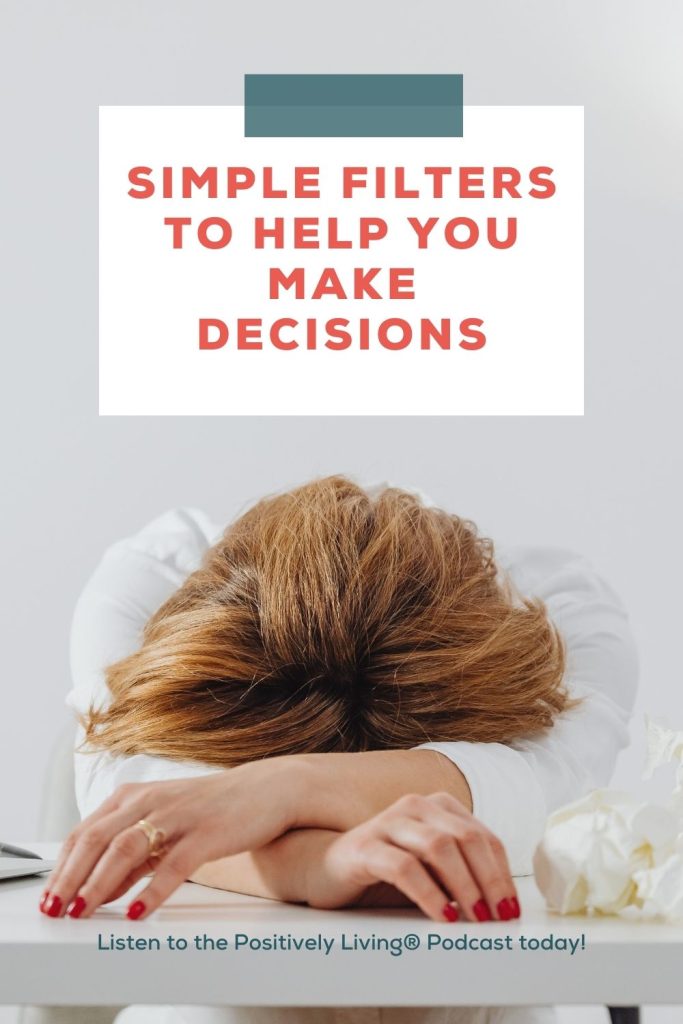
Does it ever feel like the simple question “What should I do next?” is enough to send you into a tailspin? If you find yourself staring at your to-do list, feeling paralyzed by the sheer volume of choices, you are not alone. One of the most common hurdles to productivity isn’t a lack of knowledge or desire. It is the exhaustion of constant choosing.
This week on the Positively Living® Podcast, I am diving deep into the silent battery drainer of our lives: decision fatigue. When you are mentally tired, overwhelmed by choices, or just worn down by having to decide everything, it becomes increasingly difficult to make the best decisions for yourself. Whether you are navigating caregiving, running a business, raising a family, or simply living in an incredibly loud world, decision fatigue can quietly drain your energy faster than almost anything else.
Understanding the Hidden Cost of Decision Fatigue
We often think of exhaustion as something that comes from physical labor or long hours of work. However, cognitive load is just as taxing. Think of the apps on your smartphone that churn away in the background. You might not be actively using them, but they are draining the battery until you suddenly realize you are at five percent power. Decision fatigue works the same way.
When we constantly ask ourselves what to work on, what to eat, what to say yes to, and what to let go of, we are depleting our mental reserves. This is why many people find themselves making poor choices late in the evening or feeling completely unable to choose a movie to watch after a long day of work. The goal is to move away from complicated frameworks and toward a gentler, more effective solution. By implementing simple filters, you can reduce the number of decisions you have to make, support your nervous system, and find direction without unnecessary rigidity.
Why Filters are the Ultimate Productivity Tool
A filter, by definition, allows certain things to pass through while keeping other things out. In a productivity context, filters help you keep what you truly want while straining out the noise. The main goal of a filter is to help you achieve the highest result with the lowest effort.
When you create these for yourself, you are essentially deciding once so that you do not have to decide again and again. This is vital when you are tired or burned out. Filters meet you where you actually are, not where you think you should be. They don’t demand perfection or constant tracking. Instead, they provide a steady foundation you can return to whenever the world feels like it is asking too much of you. Here are five simple filters you can start using today.
Filter 1: The Power of a Word of the Year
The first filter is one that many people are familiar with but often underutilize. Choosing a Word of the Year gives you big-picture direction without the need for micromanagement. It is not a rule or a rigid checklist. Instead, it is a lens you can look through when you are unsure of your next move.
When you have a Word of the Year, such as “Ease,” “Growth,” or “Connection,” you can ask yourself a few simple questions. Does this opportunity support my word? Does this move me closer to how I want to feel this year? If a project or a request does not align with that word, the decision to decline it becomes much easier. You have already done the hard work of deciding your priority at the start of the year, so the daily application of that priority requires much less mental energy.
Filter 2: Organizing Life with Theme Days
Theme days and themed time blocks are a favorite for those who enjoy variety but need structure. Instead of waking up every morning and wondering what the priority should be, you decide once at a higher level. This answers the question of what kind of work fits into a specific day rather than what you should do with your entire life.
For example, you might decide that Tuesdays are your dedicated self-care days. While you might still do some work, the “bucket” for that day is centered on restoration. This filter also helps you protect your boundaries. If someone asks for a meeting on a Tuesday, your mind automatically thinks about your filter and prompts you to suggest a different day. It narrows the field of possibilities, which makes moving forward much faster and less stressful.
Filter 3: Honoring Your Season of Life
Acknowledging your current season of life is a profound act of self-compassion. We all move through different stages, including seasons of growth, maintenance, caregiving, recovery, or transition. Each of these seasons comes with a different level of energy and capacity.
Using this filter means asking what is realistic for you right now. If you are in a caregiving season, your capacity for a high-intensity growth project might be limited. If you try to force yourself to produce at a high level during a recovery season, you are guaranteed to burn out. By accepting the season you are in, you stop judging your current self by the standards of a past version of yourself. This filter helps you let your foot off the gas intentionally so that you can stay healthy and successful in the long run.
Filter 4: Matching Tasks to Your Energy
As a productivity coach, I often tell people that it is not actually time you are trying to manage. It is your energy. The energy filter asks you to look at what matches the bandwidth you actually have in this exact moment. This is especially helpful for those managing chronic illness or high levels of stress, where every day feels different.
When you use this filter, you consider whether your energy is low, medium, or high. You also look at the type of energy required. Do you have physical energy but no mental focus? Do you have emotional bandwidth but no desire to be social? By matching your tasks to your current state, you work with your nervous system instead of fighting against it. This creates a sustainable flow of productivity that does not leave you feeling depleted at the end of the day.
Filter 5: Putting Your Values into Action
The final filter brings everything together by looking at your core values. Values are often seen as abstract ideas, but they are most powerful when they are used as lived choices. When you experience your values as a guide for your schedule, you feel more confident and energized.
If you value health, you look at your schedule and ask if that value is visible. If you value connection, you look at your commitments to see if you are protecting time for the people who matter. When you act in alignment with your values, you show up differently. You feel a sense of purpose that makes even difficult tasks feel more meaningful. Like seasons, values can shift over time, and honoring that shift is a key part of staying productive and fulfilled.
Simplifying Your Path Forward
If you take one thing away from these filters, let it be this: you do not have to decide everything from scratch every single day. You already have the resources to make decisions quickly and easily through self-awareness. By setting up these filters, you free yourself from the cycle of overthinking and worry.
Instead of spinning your wheels, choose one filter to experiment with this week. There is no wrong place to begin, and even picking one at random will yield positive results. When the right filters are in place, your life feels less like an exhausting series of choices and more like a focused journey toward what truly matters.
For more help navigating these filters, you can find various workbooks and assessments in my Productivity Toolkit. This free resource is designed to help you figure out your personality, your strengths, and the things that energize you most. You can find it at positivelyproductive.com/plpkit.