In our modern, high-speed world, we often wear our busyness like a badge of honor. We treat our to-do lists as moral mandates, and when the weight of those responsibilities begins to crush us, we tell ourselves we just need to “push through.” But what if the secret to getting more done wasn’t working harder, but playing more?
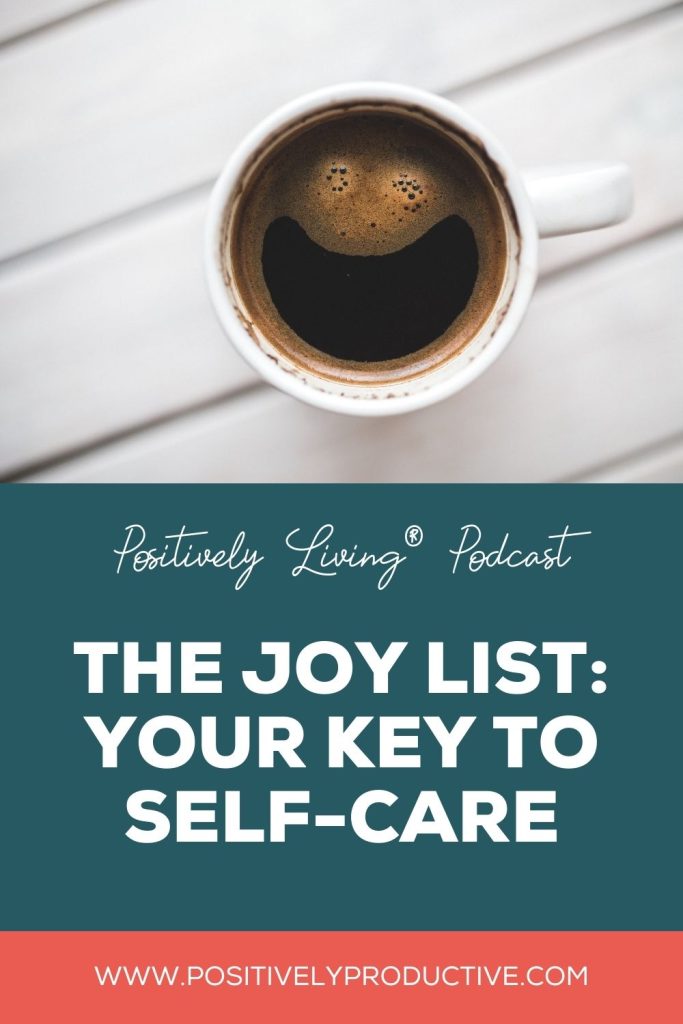
This week on the Positively Living® Podcast, we explored a concept that sounds light and playful on the surface but has a profound impact on your nervous system, your energy, and your professional output: The Joy List.
If you’ve been feeling like a “human doing” rather than a human being, it’s time to reframe your relationship with pleasure. Self-care isn’t an indulgence; it’s maintenance for the most important piece of equipment you own…yourself.
The Myth of the “Self-Care Indulgence”
We need to clear the air before we go any further: Self-care is not a spa day (unless you want it to be). Many of us succumb to the “martyrdom of the mundane,” believing that we must ignore our own needs to care for our families, our businesses, or our communities. This is a fallacy. When we neglect self-care, the results are predictable: exhaustion, resentment, brain fog, and a higher margin for error.
Think of your energy like a battery. You wouldn’t expect your phone to run for a week without a charge, yet we expect our brains to innovate and our hearts to give without regular replenishment. A Joy List is your energy map—it’s the road back to yourself when you’ve wandered too far into the weeds of “productivity.”
The Science of Joy: Broaden and Build
There is a biological reason why joy makes you better at your job. In the field of Positive Psychology, researchers discuss the Broaden-and-Build response. When we experience “negative” emotions like fear or stress, our vision literally and figuratively narrows. We go into survival mode. However, when we experience “positive” emotions—like joy, amusement, or calm—our brain does the opposite. It widens our mental lens. We become more creative, we recover from stress faster, and we become more effective problem solvers.
Furthermore, joy supports nervous-system regulation. Tiny moments of comfort act as “glimmers”…safety cues that tell your brain the world is okay. When your nervous system feels safe, you function with more compassion and clarity. In short, joy makes you a more capable human.
How to Create Your Personalized Joy List
The beauty of a Joy List is that it is uniquely yours. Your brain and your season of life are specific, so your joy must be too. To start building yours, get quiet and ask yourself these four questions:
- What truly lights me up?
- What activities make me lose track of time?
- What makes me laugh or smile without effort?
- What relaxes me down to my bones?
Be honest. Be quirky. Be specific. On the podcast, I shared that my joy includes iced coffee in total silence, rewatching comfort shows I can quote by heart, and the “rule” that I cannot move if a cat chooses my lap for a nap.
Your list might include hiking, heavy metal music, organizing a spice rack, or reading romance novels. There is no “should” on a Joy List. If it fills your cup, it belongs on the paper.
The Power of the Sliding Scale
The biggest hurdle to self-care is the belief that it requires a large block of time. We think, “I don’t have an hour for a bath, so I’ll just keep working.” To combat this, I teach my clients the Sliding-Scale Approach. By categorizing your Joy List into levels, you ensure that you always have a tool available, even on your most chaotic days.
Level 1: Micro-Joys (5 Minutes or Less)
These are quick nervous-system resets. They are designed for the person who feels they have zero time to spare.
- A single song: Put on a track that shifts your mood. Most are under five minutes.
- The “First Sip” Reset: Take one minute to drink your coffee or tea in total silence.
- A tactile moment: Pet your dog, wrap yourself in a soft blanket, or step outside to feel the sun on your face for 60 seconds.
Level 2: Nourishing Joy (30–60 Minutes)
These fill the well a bit deeper and are perfect for a lunch break or the hour after the kids go to bed.
- Cooking for fun: Not meal prepping, but making something creative and delicious.
- Immersion reading: Reading a book for pleasure, not for professional development.
- Movement: A walk, a yoga flow, or learning a new dance.
Level 3: Immersive Joy (Half-Day or More)
These are restorative experiences that prevent burnout on a foundational level.
- Day trips or adventures: Getting out of your normal environment.
- Unstructured time: A “rest day” where nothing is scheduled.
- Workshops: Learning something new just for the sake of curiosity.
Integrating Joy into Real Life
The Joy List is meant to be a living document, not a Pinterest board you never look at. To make it work, you must notice where joy already exists and intentionally protect it.
If you have already identified your Core Values, you will likely see an overlap. If you value Connection, your joy will likely involve people. If you value Freedom, your joy will involve spaciousness. When your joy aligns with your values, your self-care becomes deeply authentic.
Your Permission Slip
As you begin this practice, remember:
- You don’t owe anyone an explanation for what you enjoy.
- Joy does not have to be “productive” or impressive to be valid.
- Small joys are not “lesser” than big ones—they are often the ones that save us.
Take the Next Step
Your joy is the fuel for your life. When we support the human behind the to-do list, productivity becomes sustainable and life becomes vibrant again.
If you’re ready to move from burnout to balance, I invite you to download my free Positively Productive Toolkit. It includes the Joy List Workbook, the Core Values Workbook, and more to help you build a life that feels as good on the inside as it looks on the outside.
[Click here to grab your free toolkit at www.positivelyproductive.com/plpkit]