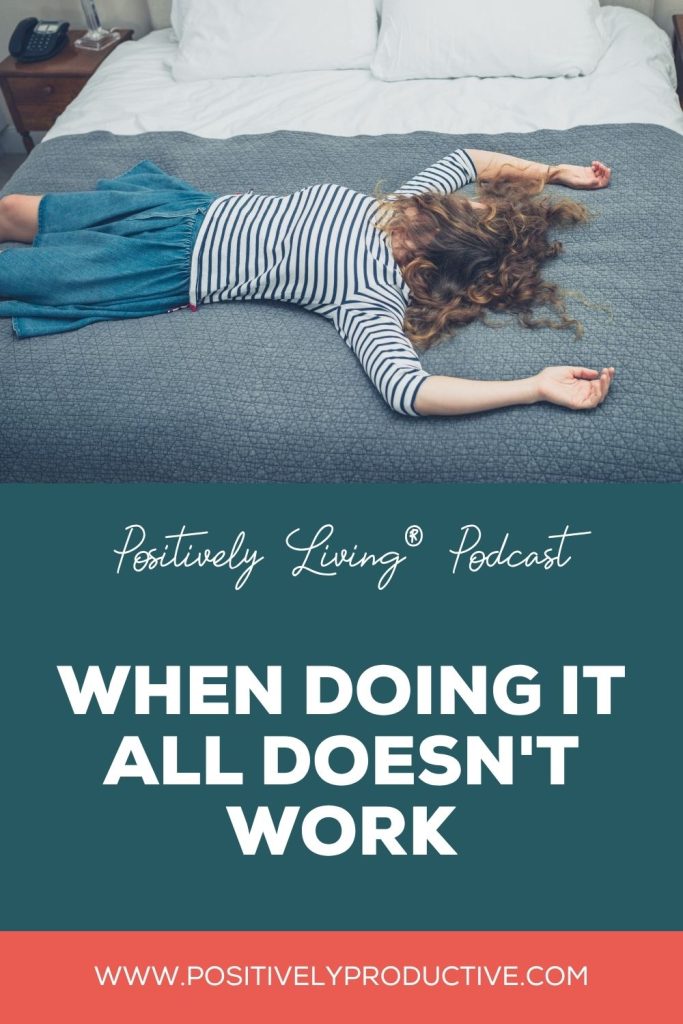
For years, you were the expert juggler. You mastered your career, ran a business, managed a family, kept up with social plans, and even tackled side projects, all while somehow making it look easy. You thrived on the momentum. But recently, that same goal that once felt necessary and achievable has started leaving you exhausted, scattered, and deeply resentful.
No matter how many planners, apps, or color-coded calendars you use, you can’t seem to find the time or energy to meet the endless expectations, whether they come from others or yourself. If this feeling of high-achiever burnout resonates, it’s time to stop pushing and start shifting your approach. Let’s talk about why we fall into this trap and what it takes to find sustainable success.
The Powerful Pull of the “Do It All” Identity
Before we discuss how to escape the trap, we must give credit where it’s due: there was a time when this pattern worked for you. There is a particular satisfaction that comes from being the capable, dependable person who gets things done. Why would anyone want to stop something that provides such a powerful sense of accomplishment?
High achievers and multi-passionate individuals are wired to crave that momentum. We see potential everywhere, in every project, cause, and goal. We take deep, almost addictive pride in being capable and reliable. The variety feels energizing, and the results earn us recognition and the feeling of being needed. This creates a relentless feedback loop: the more we do, the more we are praised, and the harder it becomes to stop.
The Influence of Cultural Conditioning
Beyond personal drive, there’s a massive cultural layer, especially for women. The feminist ideal of “having it all” unfortunately morphed into the expectation of “doing it all.” It was meant to be empowering, demonstrating that we could seamlessly combine career, family, and passions.
However, this expectation meant keeping everything running smoothly, leading many to feel obligated to add on instead of learning to choose. The slippery slope from genuinely wanting to help and connect to over-functioning is steep. As I discussed with Mallory Jackson in Episode 53 on codependency, our desire to care for others can quietly turn into managing everyone else’s needs, leading us to say yes to everything out of a deep-seated fear of disappointing someone.
Why We Stay Trapped (Managing Fear, Not Time)
Even after we intellectually realize that the burden is too heavy, we often repeat the same exhausting pattern. Why? Because our brains and emotions have built an identity around being reliable and capable. Changing that identity triggers fear and fear keeps us busy.
- The Control Mechanism: Doing it all provides an illusion of safety and control. It’s how we try to manage uncertainty or avoid the sting of guilt.
- The Emotional Avoidance: Saying yes to a busy schedule often feels easier than setting and protecting firm boundaries. Furthermore, being busy is a powerful distraction. We fill every inch of our schedule to avoid stillness, because stillness often forces us to face the truth: the current pace is no longer serving us.
When we constantly say yes out of fear—fear of missing out, fear of being seen as lazy or selfish, fear of letting someone down—we trade a little piece of our energy and peace with every obligation we accept.
The Cost of the Overdrive Cycle
The physical and emotional toll of the “do it all” trap is undeniable. You wake up already tired, you forget what feeling truly rested feels like, and your creativity fades. Patience thins, and everything that used to feel purposeful now feels like just another obligation.
The inner monologue shifts to resentment (“Why is it always on me?”) followed by a crippling sense of guilt (“I shouldn’t feel this way; I chose this.”). Both resentment and guilt are critical signals that your system is running dangerously off balance. If ignored, the destination is often severe burnout, which impacts your relationships, your quality of life, and your long-term wellness. Your body and brain are giving you vital feedback that this pace is simply not sustainable.
Shifting from Doing It All to Doing What Matters
The path out of this high-achiever trap begins with two simple, yet profound, actions: pause and get honest.
1. The Honesty Inventory
First, ask yourself: What am I expecting of myself, and what are others expecting of me? Get brutally honest about your current capacity. It can be frustrating to admit your limits; it feels like a hit to the ego. But honoring your limits is not failure; it is essential protection for your well-being.
Once you admit there is something amiss, take inventory of every task, worry, and “should” swirling in your mind. I recommend a simple, yet powerful, Guided Mind Sweep to get those things out of your head and onto paper. When everything remains a habit or a thought, it all feels equally important. Writing it down allows you to see the big picture and start reducing your demands safely.
2. Manage Energy, Not Time
The next step is applying the 80/20 Principle (Pareto Principle), which states that roughly 80% of your results come from 20% of your efforts. You can reduce what you do without reducing results by finding those few actions that create the biggest impact.
Prioritizing is an act of managing energy, not just time. Ask yourself these critical questions:
- What actually requires me?
- What can I simplify, delay, or delegate?
- What would “enough” look like this week—not perfect, just enough?
When you start asking these questions, you begin the essential shift toward true productivity, where you choose quality over quantity, and your efforts align with your energy levels.
Embracing Sustainable Success
One of the hardest parts of this journey is letting go of the old identity: the person who could do it all. It’s okay to grieve that version of yourself. But thriving in this next season requires a different kind of strength—the strength that comes from knowing and setting boundaries and honoring them fiercely.
Doing it all might have worked when life was simpler, but at what cost? You are not meant to live in perpetual overdrive. Doing more doesn’t make you more valuable; it just makes you more exhausted.
It’s time to define what sustainable success truly means for you. When you design your days with intention instead of impulse, you create space for rest, creativity, and being present. You move from reactive to proactive, achieving your goals by finesse instead of force.
If you’ve been trying to keep up, feeling constantly behind, take this as your gentle but firm reminder: You don’t have to do it all. You are meant to do what matters most, in a way that honors your energy and your life.
True success isn’t about how much you can handle. It’s about how well you align your efforts with your values, your energy, and your season of life.
If you are wondering how to start the process of assessing your workload and reducing it, I welcome you to reach out. The Clarity Call is a great place to start your journey out of overwhelm: positivelyproductive.com/clarity
What is the single most important thing you are going to let go of this week to protect your energy?